
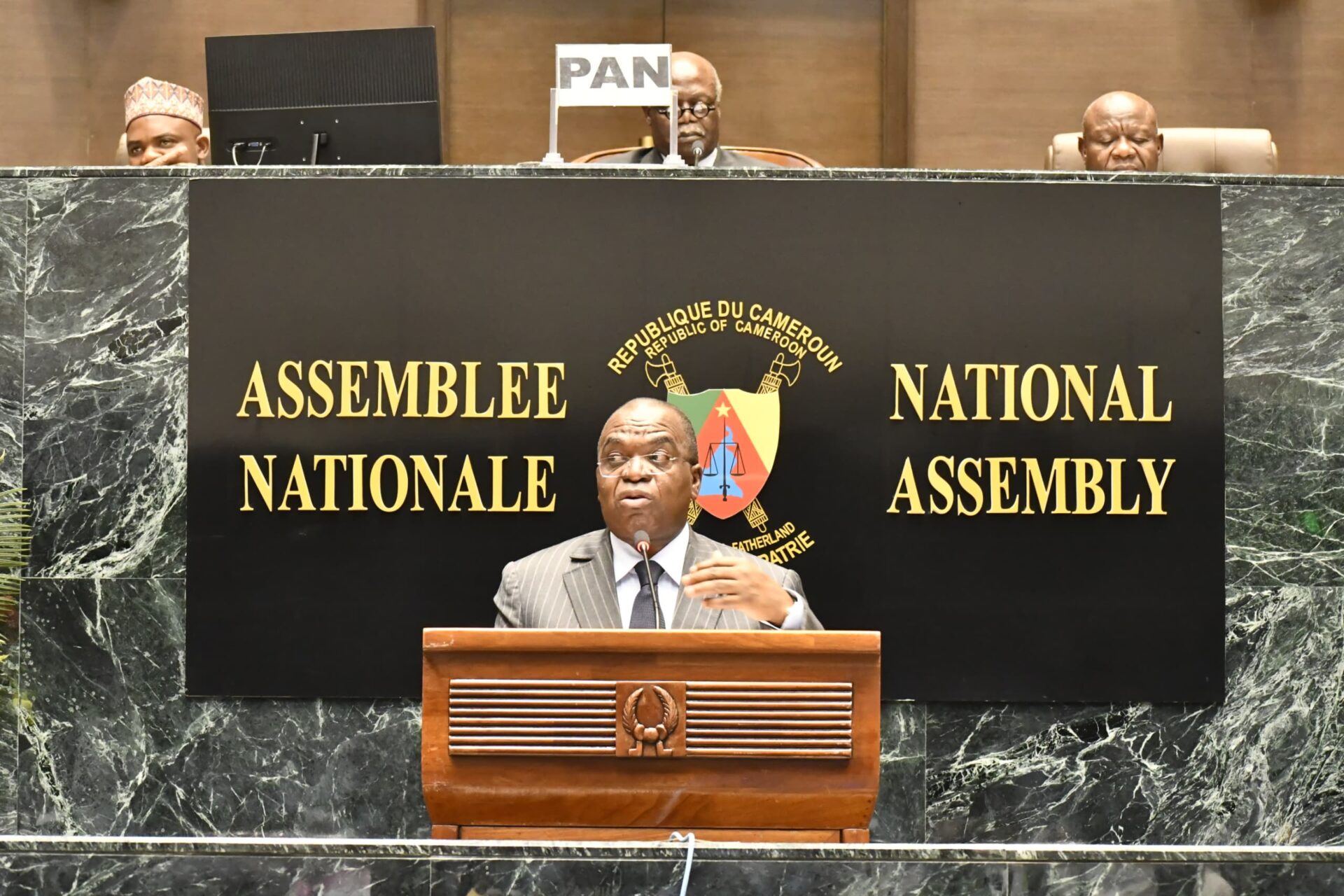
The adoption of the 2026 Finance Bill marks major public spending shift.
With a newly approved budget totalling 8,816.4 billion FCFA, the government is signalling an ambitious push toward infrastructure development, youth and women empowerment, and a reorientation of public investments aimed at stimulating economic growth and social inclusion. The 2026 budget represents a significant leap, about a 14% increase relative to 2025. The general State budget rises to 8,683.9 billion FCFA, a 13% increase over last year. The portion allocated to Special Appropriation Accounts (CAS), designed to fund targeted programmes, is set at 132.5 billion FCFA – nearly double the 2025 amount.
Notably, a new “Special Fund for Women’s Economic Empowerment and Youth Employment” is endowed with 50 billion FCFA motioning a clear policy focus on boosting opportunities for these groups. Public investment is also ramped up. The 2026 plan foresees 2,026.3 billion FCFA in public investments, reflecting the government’s intent to support structural and social projects.
One of the clearest shifts in spending priorities concerns infrastructure, particularly roads and public works. Under the 2026 plan, the Ministry of Public Works (MINTP) is to dedicate more than 92% of its 2026 budget to the national road network for construction, rehabilitation, and maintenance. The targets are ambitious, around 650 km of new paved roads and over 1,300 meters of engineering structures (bridges, overpasses, etc.) are planned – a sign that improving national connectivity remains a major governmental priority.
This push suggests a deliberate strategy: better roads and transport infrastructure, improved access across regions, and support for trade, agriculture, and mobility, which key components to stimulate economic activity nationwide.
The scale of the 2026 budget inevitably comes with financial pressures. The government expects a deficit of 631 billion FCFA, up from 309.9 billion in 2025. Overall financing needs are projected at 3,104.2 billion FCFA, requiring substantial mobilization of external and internal funding sources.
To fill the gap, the plan includes external borrowing, project loans, domestic bank financing, public securities issuance, plus additional sources such as budgetary support and exceptional financing.
Beyond roads and physical infrastructure, the 2026 budget frames itself as more than a spending plan, it is as a blueprint for social transformation and economic resilience. The creation of a dedicated women’s economic empowerment and youth employment fund reflects a renewed emphasis on social equity, job creation, and support for vulnerable demographics.
Public investments also target urban infrastructure (including urban roads), support for agriculture and basic industries (for example through support to the cotton sector), and direct subsidies or transfers aimed at stimulating local economies.
The overall ambition is to align the budget with long-term strategic frameworks like the national development plan (SND30 – strategically guiding Cameroon’s development through 2030), and to modernize public finances in a context of global economic uncertainty.
Claudette Chin