

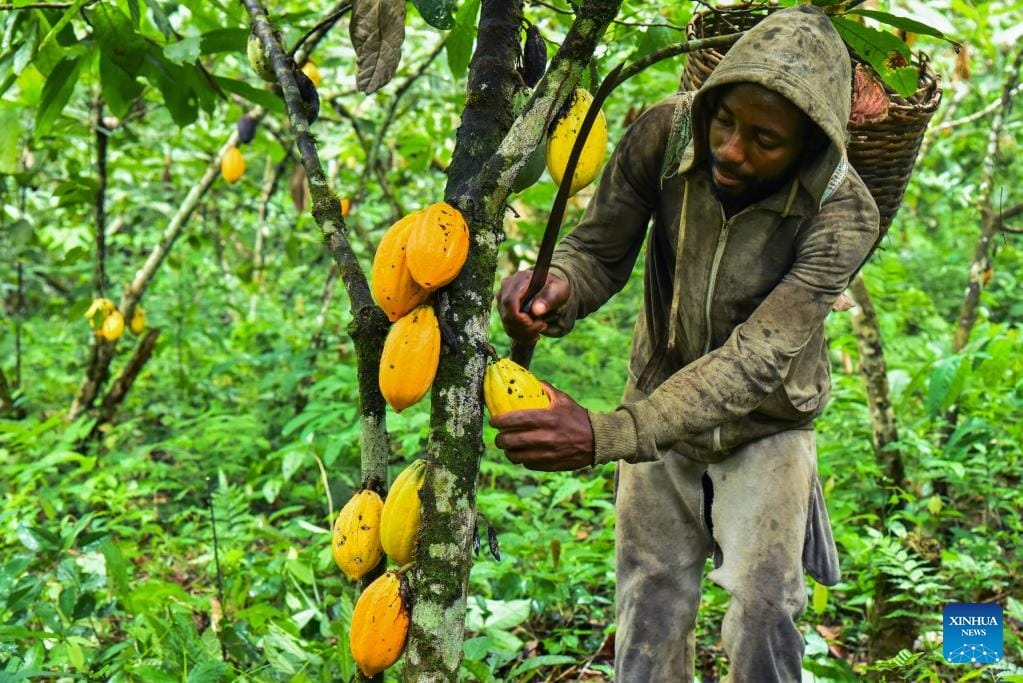
Long known primarily as an exporter of raw beans, Cameroon is now taking the processing path.
The laying of the foundation stone for a new 32,000-tonne cocoa processing plant in Baré-Bakem is another concrete signal. With this additional capacity, Cameroon can now process more than 250,000 tonnes of cocoa locally, against an annual production of about 300,000 tonnes. This would mean that over 80 per cent of cocoa can be transformed at home into butter, powder and other semi-finished products instead of being shipped abroad in raw form. For a sector that for decades exported wealth along with its beans, this marks a decisive shift.
For much of modern economic history, cocoa-producing countries played the role of suppliers of raw materials while industrialised nations captured the higher margins through processing and chocolate manufacturing. Even today, the bulk of global grinding still takes place outside Africa. By expanding domestic transformation, Cameroon is positioning itself to retain a greater share of the value chain. Create industrial employment, stimulate small and medium-sized enterprises, increase export earnings and reduce its exposure to the volatility of international commodity prices.
This transformation is not taking place in isolation. It fits squarely within the National Development Strategy (NDS30) and the broader policy of import substitution, both of which aim to reduce dependence on raw commodity exports and build a stronger manufacturing base. Local processing strengthens foreign-exchange earnings, deepens industrial skills and provides a buffer against the speculative swings of global markets that often punish countries at the bottom of the value chain.
The amultiplication of grinding plants is already having a direct impact on producers. Increased competition for beans is helping to sustain better prices for farmers, while the country’s international recognition for quality, including a gold medal at the Cocoa of Excellence Awards in Amsterdam, strengthens its position in premium markets. Quality combined with local processing is what transforms a crop into an economic engine.
The next phase will be decisive. Reports say a national cocoa policy expected before the coming season aims to organise the sector, improve revenue sharing, protect quality and consolidate local industry. If effectively implemented, it will provide the governance framework needed to turn capacity into inclusive growth.
This is therefore not just an agriculture story. It is an industrialisation narrative. It is the emergence of rural capitalism. It is import substitution in motion. It is a new field of opportunity for diaspora investment. Above all, it is the construction of a value chain that keeps more wealth within the economy.
Jude Viban