
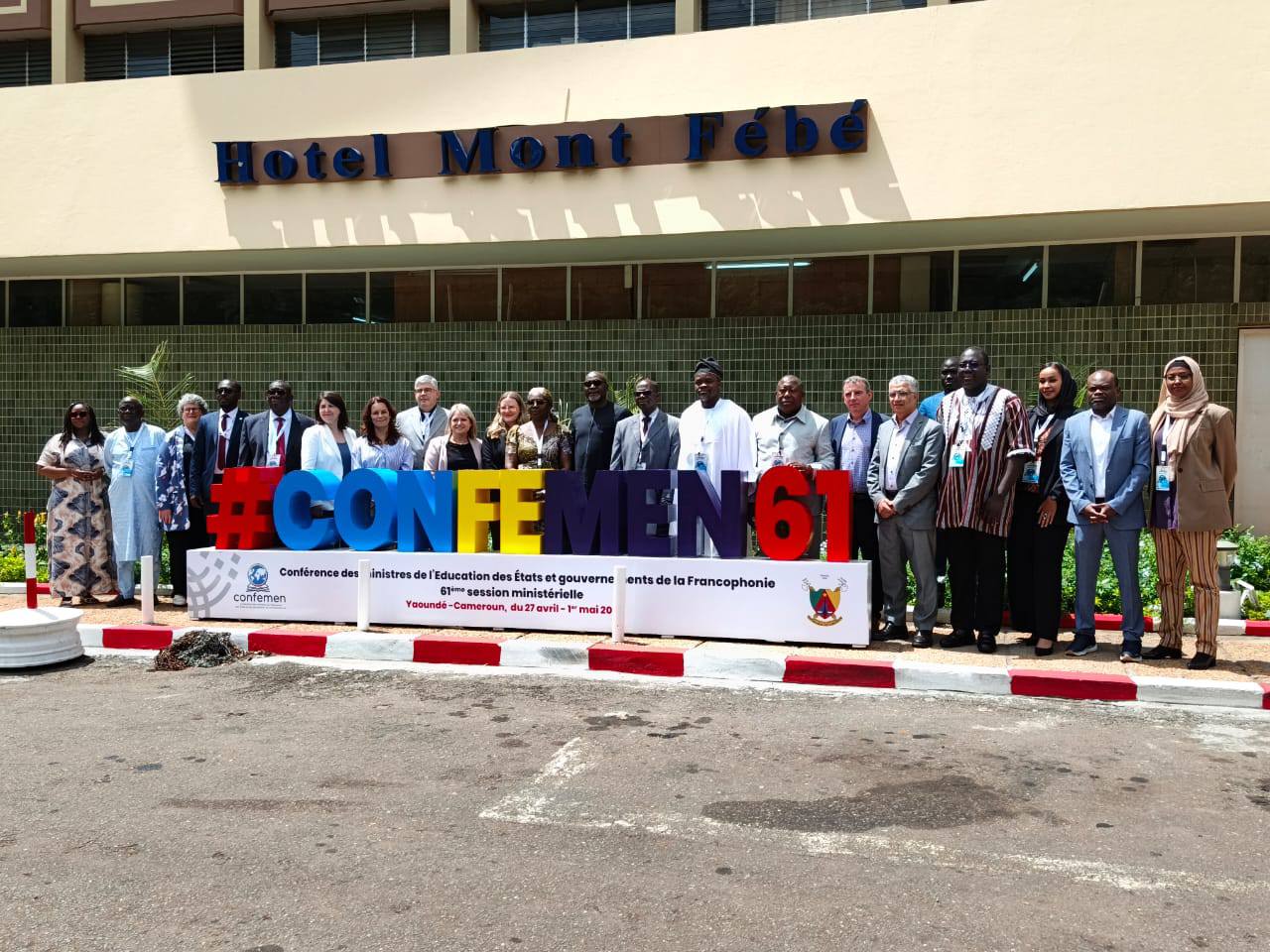
The 61st Conference of Ministers of Education of French Speaking states and governments opens in Yaounde today 29 April 2026.
Delegations from over 40 Francophone states begin examining structural challenges in the education sector. Held under the theme of enhancing the teaching profession as a driver of educational transformation, the meeting is not merely another multilateral gathering – it is a policy-shaping platform aimed at accelerating progress toward UN Sustainable Development Goal 4 (SDG4), which targets inclusive and quality education for all by 2030. Hosting CONFEMEN offers Cameroon the opportunity to showcase its reforms, shape regional education priorities, and position itself as a reference point in Francophone educational policy. The session provides access to peer learning, policy benchmarking, and technical cooperation, core functions of CONFEMEN, which supports member states in evaluating systems, sharing best practices, and guiding reforms.
Yet this strategic positioning comes at a time when Cameroon’s education system is under internal strain. At the heart of the discussions is the teaching profession – its status, motivation, and effectiveness. In Cameroon, teacher shortages, declining motivation, and migration are undermining system performance. A growing number of trained teachers are leaving classrooms or the country altogether in search of better pay, working conditions, and career prospects. This creates a structural contradiction. While policies aim to improve quality, equity, and system efficiency, the human capital required to deliver those outcomes is steadily eroding. In practical terms, this translates into overcrowded classrooms, uneven learning outcomes, and increased pressure on the remaining workforce, factors that directly threaten the achievement of SDG4.
The timing of the CONFEMEN session is therefore critical. Its focus on “valorising the teaching profession” aligns directly with Cameroon’s most urgent bottleneck – retention and motivation.
If leveraged strategically, the platform could enable Cameroon to reframe the teacher crisis not as a national failure, but as part of a broader systemic challenge across Francophone education systems, requiring coordinated responses.
The real outcome of this meeting will not be measured by the quality of its resolutions, but by what happens after the delegations leave Yaoundé. Because in the end, no education system transforms on policy alone, it transforms on the strength, stability, and presence of its teachers.
Claudette Chin