

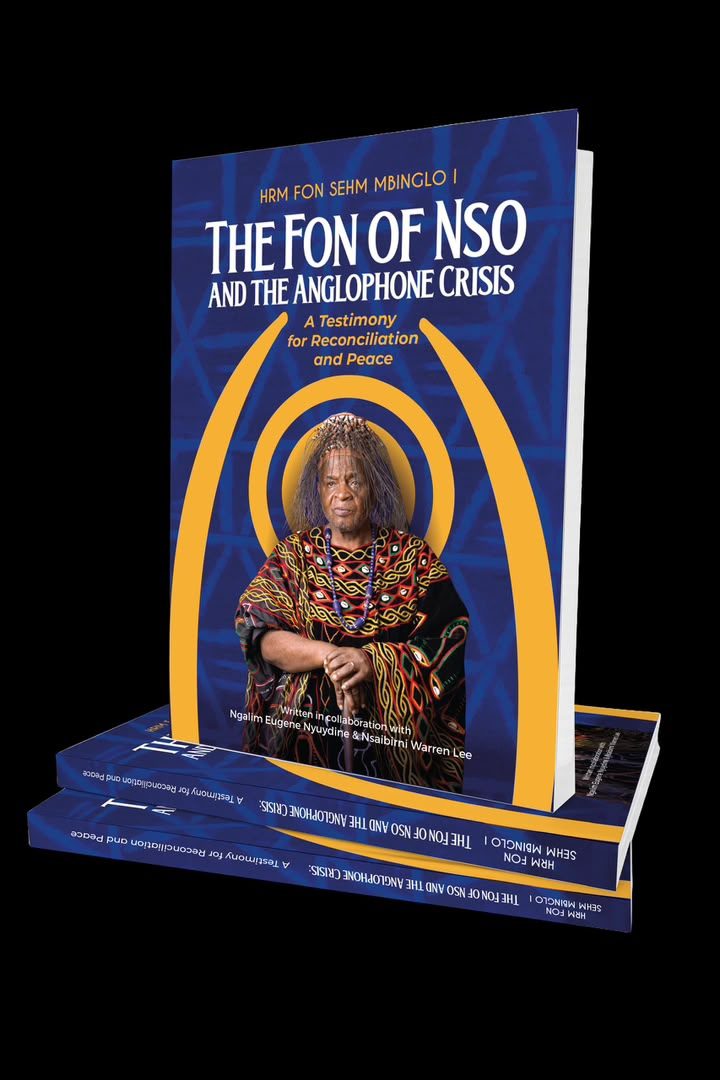
On June 25, the book titled “The Fon of Nso and the Anglophone Crisis: A Testimony for Reconciliation and Peace” will be officially launched.
For years, the Fon of Nso carried memories that were difficult to express. He carried the weight of a crisis that disrupted communities, tested relationships and placed traditional leadership at the heart of a painful national chapter. His first response when approached to document his experience was simple: “No.” Not because the story was insignificant, but because it was deeply personal. The idea of putting his thoughts into writing represented a departure from a centuries-old Nso tradition where history, wisdom and collective memory have been preserved through oral transmission. No Fon before him had committed his reflections to paper in this manner.Yet, as the wounds of the Anglophone Crisis continued to shape conversations about peace and reconciliation, the need to preserve an authentic testimony became increasingly urgent.
That testimony will come to life on June 25, with the launch of “The Fon of Nso and the Anglophone Crisis: A Testimony for Reconciliation and Peace”, a book that not only recounts events but explores the human cost of conflict and the path towards healing.
During a press briefing held ahead of the launch, organisers explained that the book reflects the Fon’s mastery of silence and listening – qualities that have defined his leadership throughout turbulent times. Rather than responding to hostility with confrontation, the Fon has consistently encouraged dialogue, consultation and forgiveness, drawing from the values embedded in Nso traditional governance.
Spanning 170 pages, the publication contains a foreword, preface, acknowledgements, seven thematic sections and several subchapters, supported by photographs documenting key moments of the Fon’s reign and the difficult period marked by the crisis.The book is presented as the Fon’s personal testimony, an effort to correct misconceptions, preserve memory and offer future generations a record of events from the perspective of a leader who lived through them.
Organisers have likened the book launch event to “Tooy Fon”, the Nso fireside conversation tradition, a space where people gather to exchange ideas, seek understanding, resolve differences and learn collectively. They argue that thebook does not seek to revive pain or deepen divisions but rather presents forgiveness as a deliberate choice and reconciliation as a responsibility shared by all.The Fon’s message is captured in a simple but powerful reminder, that “No matter how deep the crisis, we must never lose sight of the humanity in one another.”
Claudette Chin
