
Cameroon’s journey towards tranquillity, championed by President Paul Biya, continues to record gains as numerous voices insistently chorus for peace to reign before, during and after the election.
The International Day of Peace has been observed under the global call to « Act Now », resonating with profound urgency in Cameroon where its cherished peace has been shaken by the socio-political crisis in the North-West and South-West regions. A challenge that has fiercely tested the fabric of the nation. Yet, through it all, the central pillar of the state’s response has been President Paul Biya’s resolve to preserve the nation’s unity and restore lasting peace, which he has consistently framed as the non-negotiable bedrock of all development.
President Biya’s philosophy on peace is not a recent electoral mantra but a long-held conviction. In his address to the youth in 2016, he stated, “There can be no development without peace, and there can be no peace without security.” This maxim has guided government’s dual approach of pursuing national dialogue while strengthening state authority. Paul Biya has repeatedly emphasized that Cameroon’s “one and indivisible” status is sacrosanct, a principle from which no deviation is tolerated, as the nation’s future prosperity depends entirely on this foundational stability.
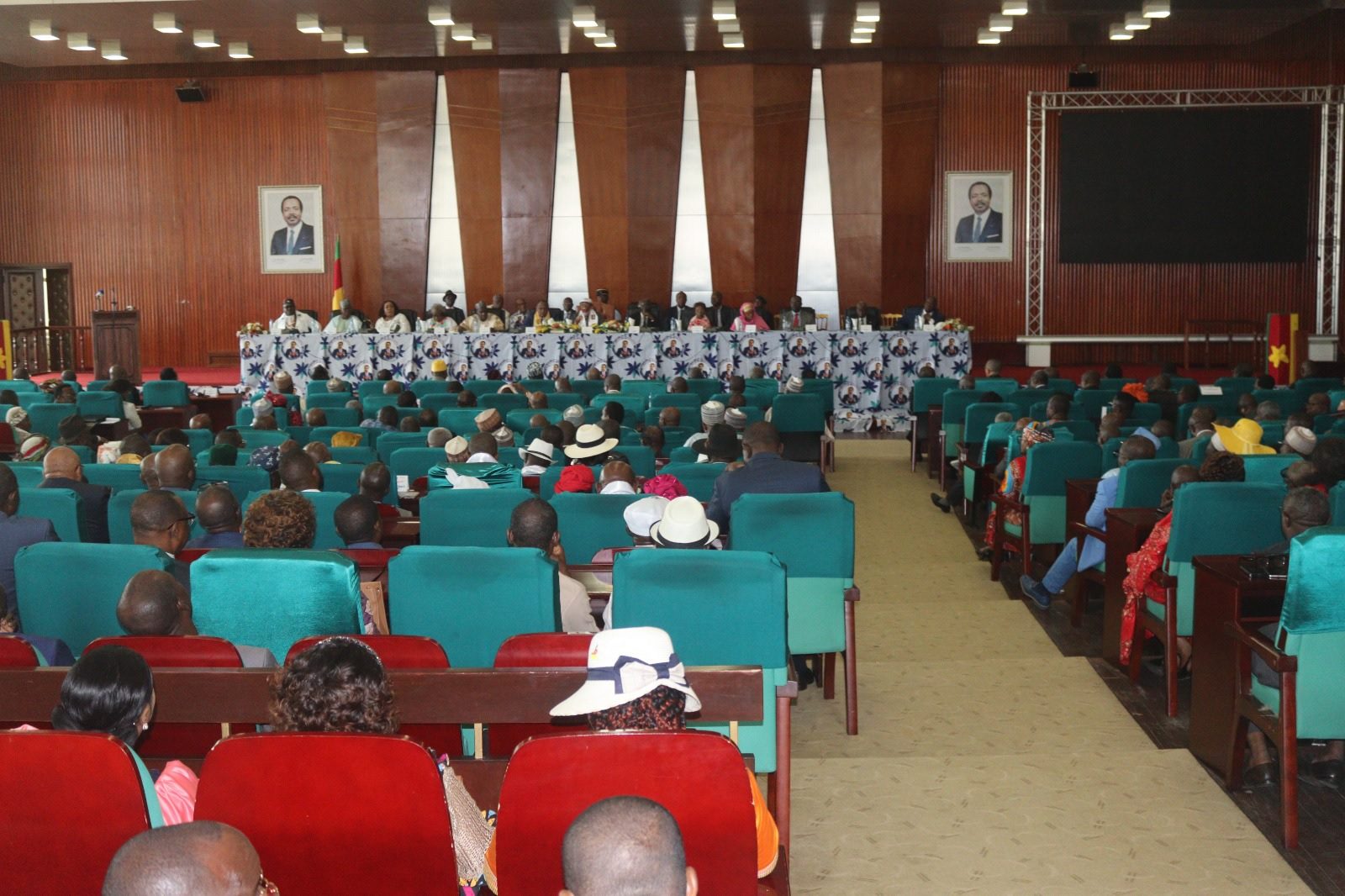
This quest for peace has moved beyond the corridors of power in Yaounde. Militants of the CPDM have been at the forefront of a relentless, grassroots crusade. From local community reconciliation meetings, party officials have worked to convince ambivalent youths and combatants to drop their arms and embrace the nation’s outstretched hand. The “Disarmament, Demobilization, and Reintegration” (DDR) centres, though facing challenges, stand as proof of government’s efforts, offering a pathway for those who choose peace over conflict.
Electoral periods often amplify tensions, and the shadow of the crisis in the Anglophone regions looms large. There is a palpable anxiety, but also a determined chorus of voices calling for calm. The Archbishop of Bamenda, His Grace Andrew Fuanya Nkea, recently echoed the sentiments of many religious and civil society leaders: “We pray and urge all actors to ensure that the electoral process is conducted in an atmosphere of peace. We need peace before the elections, during the campaigns, and, most importantly, after the results are announced. The future of our children depends on it.” This call underscores a national understanding that any political victory is meaningless without the prize of peace.
As the world reflects on the imperative to “Act Now for a Peaceful World,” efforts to silence the guns in the restive regions, the grassroots activism of peace champions, and the fervent prayers for a violence-free election are all part of a complex tapestry. The path to lasting peace remains arduous, but the resolve from the Unity Palace and across vast segments of the population is clear: Cameroon’s destiny as one and indivisible nation is paramount, and every action, especially in this electoral season, must be taken in its defence.
Claudette Chin