
Under President Paul Biya, Cameroon has taken strong and deliberate steps to reform its education sector, with reforms that show clear results across basic, secondary, and higher education. Claudette Chin
Over the years, government under the impulse of President Biya has treated education as a national priority. The government continues to increase funding, introduce reforms, and protect the right to quality education. Paul Biya’s statement that, “The bulk of the State budget is devoted to the education sector,” reflects this ongoing effort.
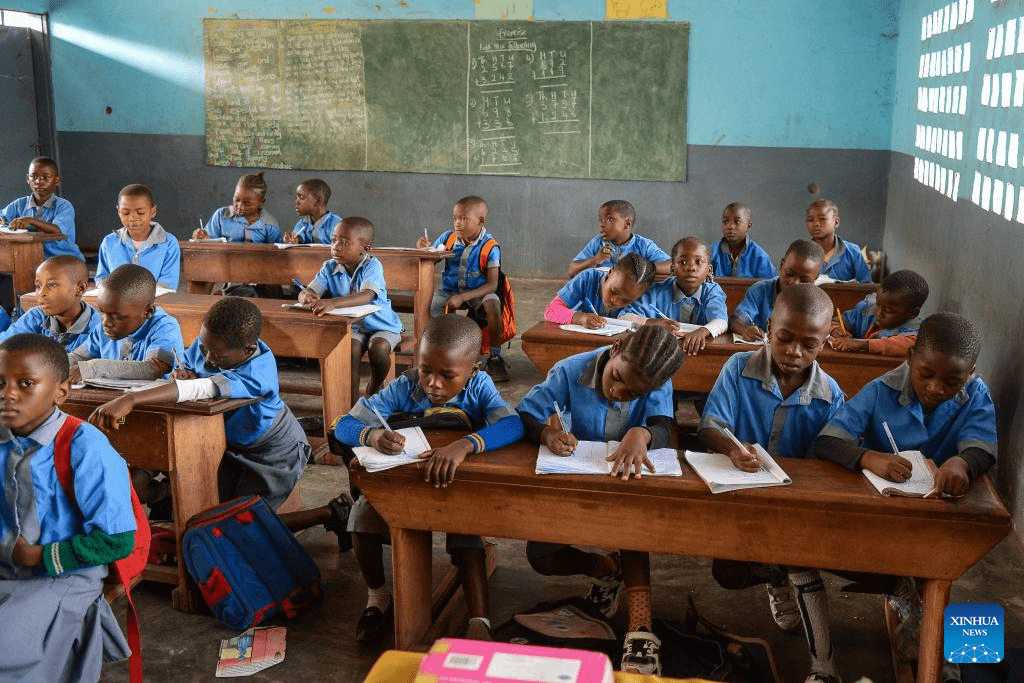
At the basic level, Cameroon made primary education free in 2000. This important step opened access to children across the country. In 2010, the government adopted a decentralization policy to universalize free education. Schools were built. Teachers were trained. Instructional materials were distributed. These actions increased enrolment and reduced dropout rates.
In the secondary sector, the Ministry of Secondary Education has taken major steps. Since 2020, students must now score at least 10 out of 20 to pass national exams such as the BAC and BEPC. This standard improves discipline and academic seriousness in classrooms. In 2022, the government transferred the upkeep of secondary schools to Regional Assemblies. The curriculum, textbooks, and teacher recruitment are still controlled at the central level. This structure improves school conditions while keeping national standards intact. From 2012, the Competency-Based Approach began in secondary education. This method focuses on practical knowledge and student participation. Between 2013 and 2020, the Education and Training Sector Strategy improved quality from primary to secondary education. In recent years, vocational and technical training has received more attention. These efforts prepare students for the workforce and reduce unemployment.
In higher education, reforms have created a new direction. On July 25, 2023, the government passed Law No. 2023/007. This law supports the development of entrepreneurial universities. These institutions now train students to be job creators. They also raise their own funds. This move makes universities more dynamic and practical.
The President also launched the Special Youth Plan in 2017. It came with a budget of 102 billion CFA francs. This plan supports youth in agriculture, the digital economy, and self-employment. It complements reforms in universities and technical training.
Cameroon’s bilingual system, shaped by its dual colonial history, has also seen progress. The Major National Dialogue in 2019 granted the English-speaking regions more autonomy in managing education. Regional Assemblies now play a bigger role in school oversight. The government also formed the National Commission for the Promotion of Bilingualism and Multiculturalism in 2017. It works to ensure equal use of English and French in schools and public offices.
In times of crisis, the government has continued to act. In early 2025, it paid exam fees worth 118 million CFA francs for students affected by floods. This protected their right to education. By recognising education as a fundamental right of every child, government is relentless in ameliorating the education system through teacher professionalisation initiatives, educational decentralisation policies, and essential partnerships.