
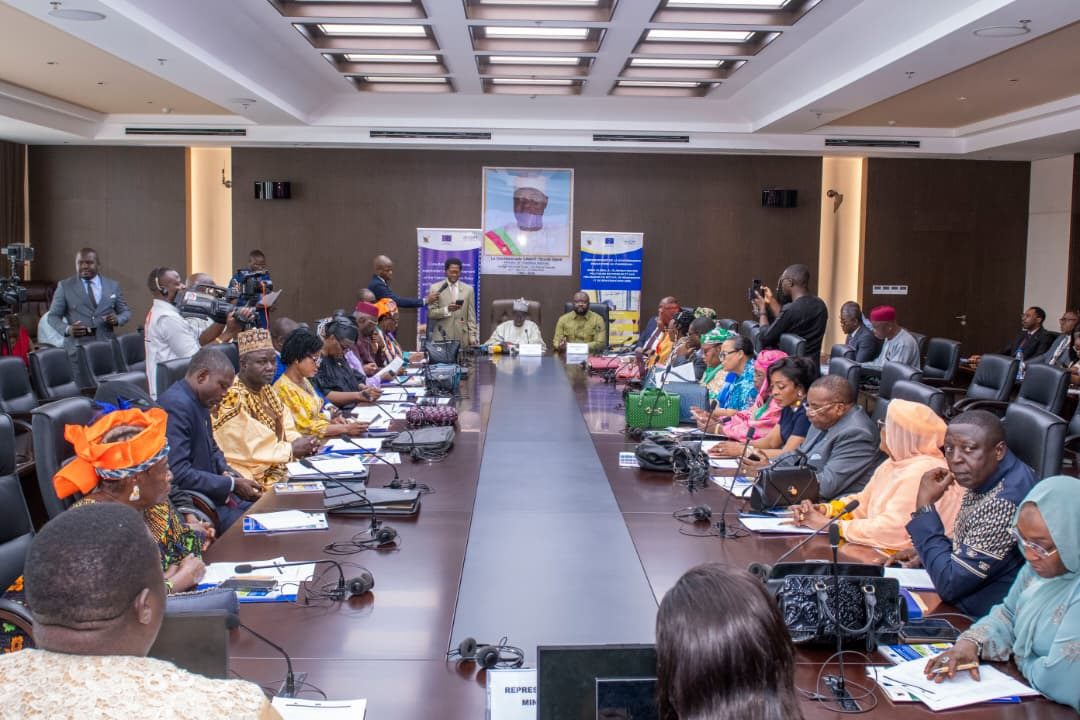
The MPs held deliberations with international partners on April 9, 2026, as Cameroon positions itself to better manage migration flows while safeguarding human dignity.
Members of the National Assembly engaged with the International Organization for Migration (IOM) in working session aimed at refining Cameroon’s legislative and policy response to migration. Presiding over the sitting, Honourable Zondol Hersesse, Chair of the Constitutional Laws Committee, called for forward-looking legislation capable of addressing the evolving dynamics of migration. He stressed that the development of a National Migration Policy must be anchored in legal instruments that reflect both domestic realities and international obligations.
Discussions centred on the elaboration of a Voluntary National Review of the Global Compact for Migration, a landmark intergovernmental framework adopted in 2018 to promote safe, orderly and regular migration while ensuring respect for the human rights of migrants irrespective of status. The Compact, though non-binding, has increasingly guided national legislations across Africa, encouraging states to align domestic laws with global standards on migration management, labour mobility, border governance and migrant protection.
Honourable Vincent de Paul Emah Etoundi highlighted the tangible impact of IOM interventions, particularly in the reintegration of returning migrants into local communities. He noted that reinsertion programmes not only restore dignity but also contribute to local economic resilience when properly supported by policy frameworks.
For his part, Abdel Rahmane Diop, Chief of Mission of the IOM in Cameroon, underscored the importance of sustained dialogue between legislators and technical experts. According to him, such exchanges are critical in strengthening parliamentary oversight and shaping reforms that respond to emerging migration challenges. He emphasized the organisation’s role in providing data-driven insights and technical expertise across sectors, including agriculture, where migrant communities often introduce innovative practices that boost productivity.
Cameroon’s strategic position as a host country for refugees in the Central African sub-region further amplifies the urgency of comprehensive migration governance. Lawmakers examined the need to reinforce legislation against human trafficking and migrant smuggling, in line with international conventions such as the Palermo Protocols, while ensuring protection mechanisms for vulnerable populations.
The session, jointly organized by the IOM and the National Assembly, brought together representatives from the Ministry of External Relations and civil society organisations, reflecting a multi-stakeholder approach increasingly recommended in migration governance frameworks worldwide.
Globally, countries have been adopting integrated migration laws that combine border management, asylum systems, labour migration policies and reintegration strategies into unified legal frameworks. In this regard, Cameroon’s ongoing efforts to craft a National Migration Policy signal a shift towards more structured governance, including provisions for return, readmission and sustainable reintegration mechanisms. Stakeholders committed to sustained technical collaboration and outlining a concrete roadmap toward establishing a durable migration governance framework. The envisioned system aims to align national legislation with international standards while responding to the socio-economic realities of Cameroon.
Claudette Chin